
Particle で: Location of Action & Means (Active stage, tool, material & total scope)
The dynamic particle of action, means, and context. Marks where an event actively happens (contrast with static に), the tool used to do it, and the transport you ride.
Location Where an Action Takes Place (で)
toshokan de benkyou shimasu
I study at the library.
Being there or doing something there
Micro-Shift公園に います。
Where you areI'm in the park.
に marks the spot where someone or something simply exists. The verb is いる or ある: nothing is being done, you are just there.
Example Sentences
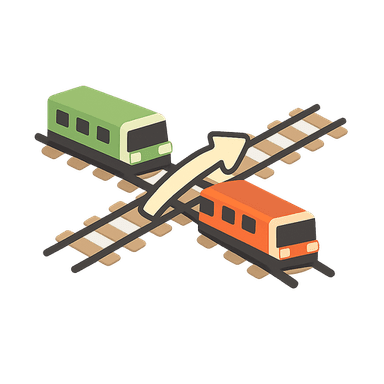
Transfer at the next station
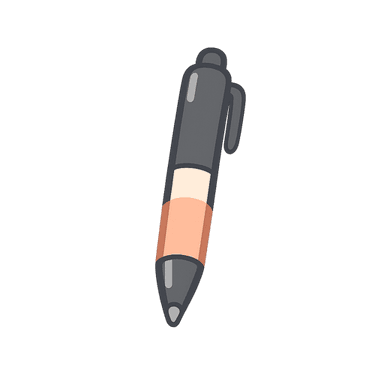
Write with a ballpoint pen.
Mental Model: The Active Stage and The Handy Tool
If the particle に is a pinpoint tack pinning an item statically to a map, the particle で (de) is the buzzing stage floor of human energy and action.
Whenever someone is actively doing something—eating, studying, running, working—で frames the physical arena where that drama unfolds: [Active Venue] + で + [Action Verb]
Simultaneously, で acts as the handy instrument or medium you employ to accomplish an objective: [Tool / Method / Transport] + で + [Action Verb]
The Grand Duel: で (Action Stage) vs に (Static Resting Point)
Understanding when to choose で versus に is a rite of passage for every Japanese student:
- Action Taking Place at a Venue (Use で!): 図書館で 勉強します (“I study at the library.”) レストランで パスタを 食べました (“I ate pasta at the restaurant.”)
- Static Existence & Settling Down (Use に!):
- Existence: 教室に 学生が います (“There are students in the classroom.”)
- Entering a state of rest: 椅子に 座ります (“Sit down on a chair” — the chair is the landing target!).
- Dwelling: 東京に 住んでいます (“I live in Tokyo”).
The Four Faces of Particle で
- 1. Physical Tool or Instrument: 箸で ご飯を 食べます (“I eat rice with chopsticks.”) 鉛筆で 名前を 書きました (“I wrote my name with a pencil.”)
- 2. Means of Transportation & Communication: 電車で 会社に 行きます (“I go to work by train.”) 日本語で 話しましょう (“Let us speak in Japanese.”)
- 3. Material / Ingredient (When Still Visible): 木で 机を 作りました (“I made a desk out of wood.”)
- 4. Scope and Total Boundary: 全部で いくらですか (“How much for everything altogether?”) 一人で 旅行に 行きました (“I went on a trip by myself / alone.”)
In Dialogue
 Yuki
 Kenji
- Yuki
- Kenji
Build the Sentence
JLPT N5Eat at the park
Arrange the words in the correct Japanese order:
- Empty slot
- Empty slot
- Empty slot
- action place / means
- eat
- park