
The small っ is a pause (促音 / Sokuon)
Master the Japanese glottal hold: the small っ (sokuon) represents one silent beat of anticipation before k, s, t, and p consonants that completely changes word meanings.
Single Mora without Pause (来て) vs Geminate Pause (切手)
Micro-Shiftここへ来てください。
Please come here.
Flowing continuous sound across two beats: ki-te.
Example Sentences
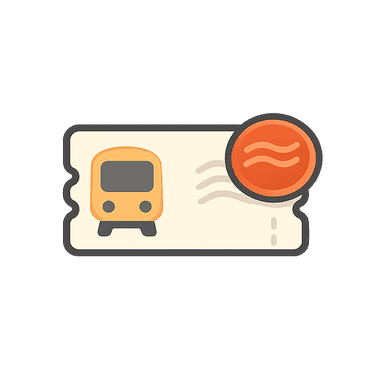
I bought a train ticket.

I bought a stamp.
Mental Model: The Silent Musical Beat (Mora Timing)
Japanese is an isochronous, mora-timed language: every single kana mora occupies the exact same length of time in the metronome of Japanese speech.
The small っ (known linguistically as the 促音 (sokuon) or double consonant stop):
- Is not pronounced like a tiny “tsu”.
- Possesses no sound of its own.
- Functions as a one-beat musical rest: your articulators (lips, tongue, or vocal folds) clamp into position for the upcoming consonant and hold the airflow frozen for one full beat before releasing it!
How the Vocal Tract Freezes Across Consonants
The physical location of the silence changes depending on the consonant that follows:
- Before K (か, き, く, け, こ): The back of your tongue seals against your soft palate and holds: 作家 (sak-ka = “novelist / author”) vs 坂 (sa-ka = “slope”).
- Before S (さ, し, す, せ, そ): Air friction freezes right at the teeth: 雑誌 (zas-shi = “magazine”).
- Before T (た, ち, つ, て, と): The tip of your tongue presses against the ridge behind your upper teeth and holds: 切手 (kit-te = “postage stamp”) vs 来て (ki-te = “please come”).
- Before P (ぱ, ぴ, ぷ, ぺ, ぽ): Both lips seal tightly together and hold the pressure: 切符 (kip-pu = “travel ticket”).
Minimal Pairs: Why Skipping the Stop Changes the Word
In Japanese, mora length is phonemic. If you shorten a double consonant or forget to pause, you are not speaking casually—you are pronouncing an entirely different word:
- 2 Beats vs 3 Beats: 来て (2 beats: ki-te = “Please come”) vs 切って (3 beats: ki-t-te = “Please cut”).
- Marital Status vs Acoustics: 音 (2 beats: o-to = “Sound / noise”) vs 夫 (3 beats: o-t-to = “My husband”).
- History vs Punctuation: 過去 (2 beats: ka-ko = “The past”) vs 括弧 (3 beats: kak-ko = “Parentheses / brackets”).
Keyboard Input and Romaji
When typing Japanese on a computer or smartphone:
In Dialogue
 Maru
電車の切符を買いましたか。
Did you buy the train ticket?
 Hana
はい、往復の切符を買いましたよ!
Yes, I bought round-trip tickets!
Tips and Common Traps
Quick Check
Select the correct word meaning ‘please cut’ (as opposed to ‘please come’).