
Connect adjectives together: 〜くて · 〜で
Link multiple adjectives into a single flowing description: use 〜くて for い-adjectives and 〜で for な-adjectives, letting the final adjective determine the sentence tense.
Connecting Adjectives in a Chain with 〜くて
kono ringo wa yasukute oishii desu
This apple is cheap and delicious.
い-Adjective (〜くて) vs な-Adjective (〜で)
Micro-Shiftこの部屋は 広くて 明るいです。
Drop い and attach くてThis room is spacious and bright.
When chaining true い-adjectives, the final い is replaced with くて (広い → 広くて).
Example Sentences
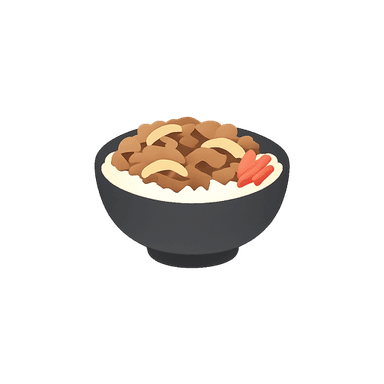
Beef bowls are cheap and delicious.
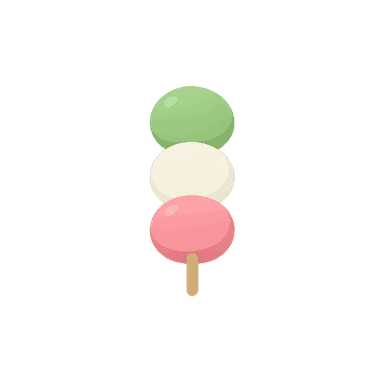
Dango is sweet and delicious.
Mental Model: The Chain of Modification (Why と Never Links Adjectives)
In English, the word “and” links anything: nouns, verbs, or adjectives (“cheap and delicious”). In Japanese, however, the particle と is strictly a noun connector: you can link りんごと バナナ (“apples and bananas”), but you cannot use と to join descriptive adjectives!
Instead, Japanese adjectives must conjugate into their connective forms (て-forms):
- They hook together like railway cars in a train.
- Non-final adjectives remain tenseless: they only describe the quality and pass the torch forward.
- The very last word in the sentence anchors the polite status and the tense (present or past) for the entire sentence.
The Two Connection Formulas
How an adjective enters its connective form depends strictly on its class:
- い-Adjectives (Drop い + 〜くて): Remove the final い syllable and attach 〜くて: 安い → 安くて (“cheap and...”) · 大きい → 大きくて (“big and...”) · 高い → 高くて (“expensive and...”).
- The Irregular Outlier: いい (Good) As always, いい reverts to its classical root よい: drop い and add 〜くて → よくて (“good and...”).
- な-Adjectives (Drop な + 〜で): Drop な and attach 〜で directly to the noun stem: 静か → 静かで (“quiet and...”) · 親切 → 親切で (“kind and...”) · 綺麗 → 綺麗で (“clean and...”).
Mixing Categories and Tense Anchoring
You can freely mix い-adjectives and な-adjectives in any order:
- い-Adjective First, then な-Adjective: この部屋は 広くて 静かです。 (“This room is spacious and quiet.”)
- な-Adjective First, then い-Adjective: この部屋は 静かで 広いです。 (“This room is quiet and spacious.”)
- Past Tense (Anchor at the End!):
To speak in the past tense, leave all intermediate adjectives in their connective form and inflect only the final predicate: 昨日の料理は 安くて 美味しかったです。 (“Yesterday's food was cheap and delicious.”) — never say
*安かったで 美味しかったです!
The Meaning Rule: Harmony vs Contrast
The connective 〜くて and 〜で forms express natural coordination and harmony:
- Harmonious Qualities: Connect positive with positive (安くて 美味しい = cheap and delicious) or negative with negative (高くて まずい = expensive and bad).
- Contrasting Qualities (Use けど / が): When qualities conflict, do not use 〜くて; use the contrasting particle けど (“but”): 高いけど、美味しいです。 (“It's expensive, but it's delicious!”).
In Dialogue
- Min-ho
あの新しいカフェ、どうでしたか。
How was that new cafe?
 Yuki
値段が安くて、ケーキもとても美味しかったですよ!
The prices were cheap, and the cake was really delicious!
Tips and Common Traps
Quick Check
Select the correct phrase to say: ‘This room is spacious (広い) and very quiet (静か).’